

November 15, 2026
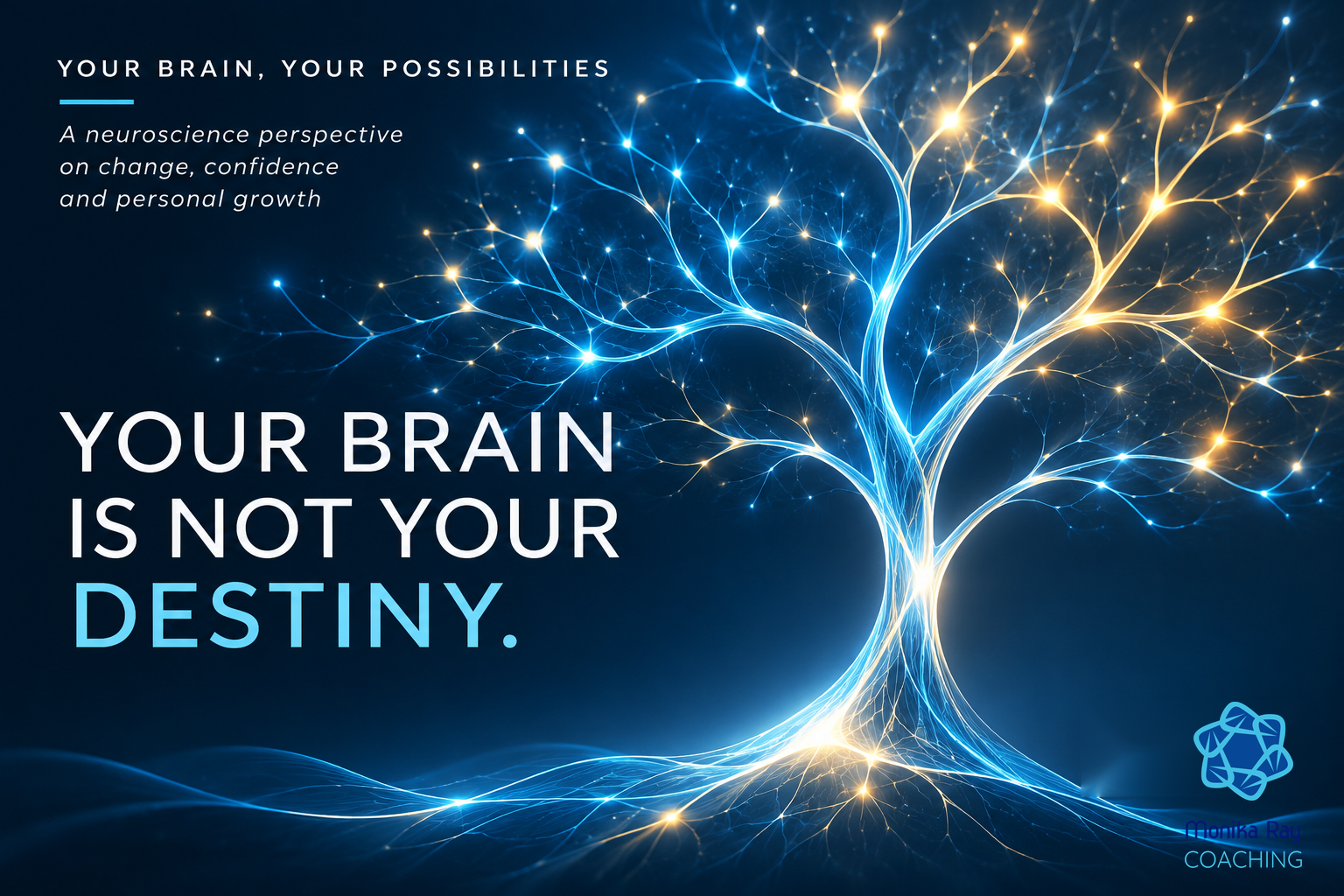
Neuroplasticity – Your Brain Is Not Your Destiny
The way you think about yourself can evolve. What if the person you believe yourself to be is not necessarily the person you have to remain?
Think about the labels we sometimes give ourselves:
“I’m not confident enough.”
“I’m not a natural leader.”
“I’ve never been good at taking risks.”
“I’m simply not the kind of person who can start again.”
We repeat these statements so often that they begin to feel like facts.
But neuroscience offers a different perspective.
Your brain is not a static organ.
It is constantly adapting to your experiences, learning and environment.
This remarkable ability is called neuroplasticity.

And here’s what makes it so exciting: scientists have found that the human brain can physically change in response to what we learn and experience.
A review of 30 human studies published in 2026 found evidence of measurable changes in brain structure associated with experience.
Think about that for a moment.
The way you learn, practise and engage with the world can help shape the very organ you use to think, feel and make decisions.
What does this mean for your everyday life?
💙 The way you think about yourself can evolve.
The beliefs you hold about your abilities are not necessarily permanent. New experiences can help you develop a different understanding of what you are capable of.
💙 Familiar patterns are not the only patterns available to you.
Your brain becomes efficient at what you repeatedly do. But you can also practise different responses, develop new skills and gradually move beyond behaviours that no longer serve you.
💙 You don’t have to feel ready to begin.
Learning something new, speaking up when you usually stay silent, taking on a challenge or exploring a different career direction may feel uncomfortable at first.
That doesn’t mean you lack the ability. It may simply mean you’re entering unfamiliar territory.
And here’s the thought I’d like you to take away:

You are not a finished product.
You are still learning, adapting and developing.
Perhaps the version of yourself you have become comfortable with is not the limit of what you can achieve.
Perhaps there is more confidence to develop, more courage to discover and more possibilities to explore than you currently realise.
So, instead of asking yourself:
“Am I capable of changing?”
Try asking: “What new possibilities could I create if I stopped treating my current limitations as permanent?”
Your brain is capable of learning.
Give it something new to learn.